

The Wrong HVAC System Costs You More Than You Think
Commercial buildings in South Bend deal with real seasonal extremes — brutal winters, humid summers, and everything in between. Choosing the wrong HVAC system for your building doesn't just mean discomfort. It means higher energy bills, more service calls, and a system that works twice as hard to do half the job.
So before you replace aging equipment or commission a new build, here's a straight breakdown of the main commercial HVAC system types and what each one is actually built for.
The Main Commercial HVAC System Types
1. Rooftop Units (RTUs)
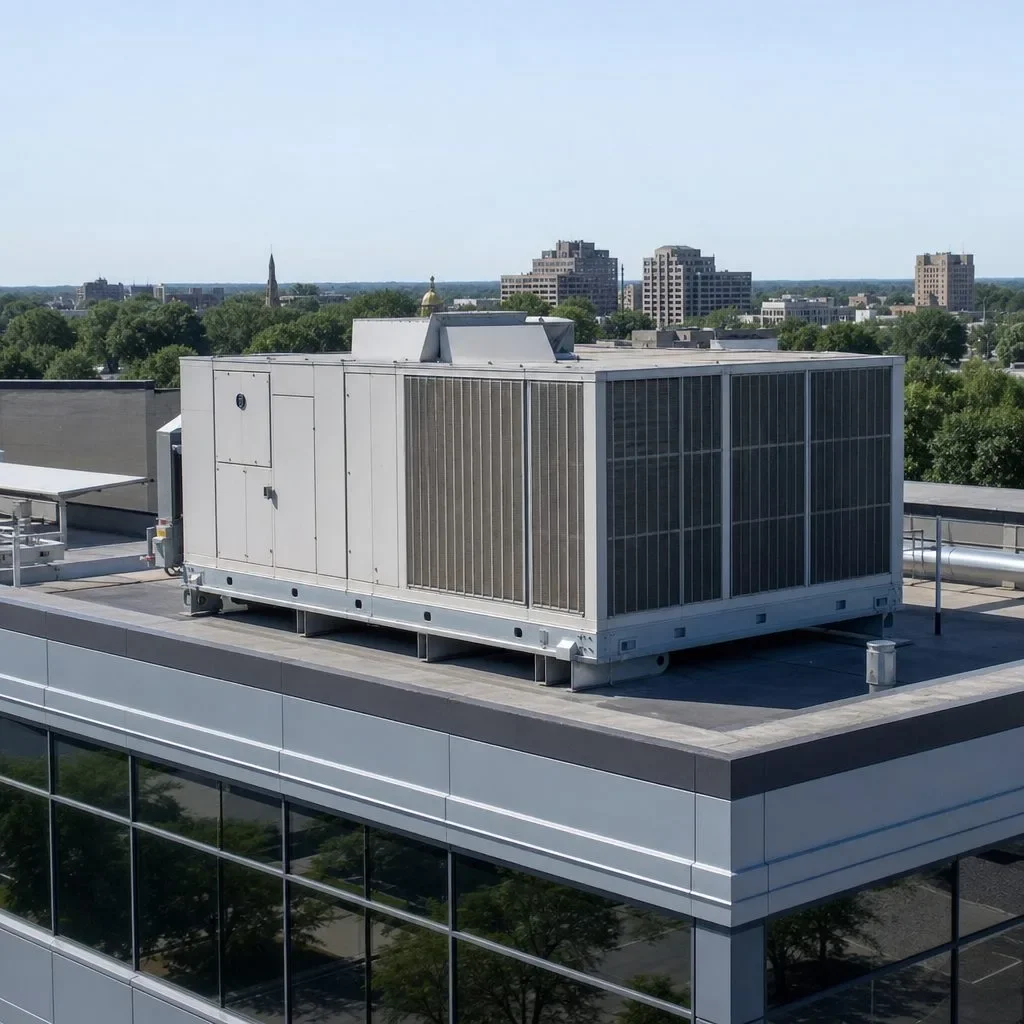
Packaged rooftop units are the most common commercial HVAC solution you'll see across South Bend — and for good reason. They consolidate heating, cooling, and ventilation into a single unit installed on the roof, which keeps mechanical equipment off the floor and out of occupied space.
Best for: Retail stores, strip malls, single-story office buildings, restaurants
Why it works: Easy access for maintenance, relatively simple installation, available in a wide range of capacities
RTUs are cost-effective upfront and straightforward to service. The tradeoff is that they're fully exposed to the elements — South Bend winters included — so insulation and quality of installation matter a lot.
2. Split Systems
A split system separates the heating/cooling components: the condenser sits outside while the air handler lives indoors. You've probably seen residential versions of these, but commercial split systems scale up significantly.
Best for: Small commercial buildings, offices, clinics, buildings where roof load is a concern
Why it works: Quieter operation, protects indoor components from weather, flexible placement
Multi-zone mini-split systems (ductless) are a popular variation for buildings with older infrastructure or spaces where running ductwork isn't practical.
3. Chilled Water Systems
In larger commercial buildings, chilled water systems use a central chiller to cool water, which is then circulated through the building via pipes to air handling units. It's a more complex system — but it's efficient at scale.
Best for: Large office buildings, hospitals, universities, multi-story facilities
Why it works: Highly efficient for large square footage, easier to zone and control, long equipment lifespan
These systems require a dedicated mechanical room and more upfront investment. If you're managing a 50,000+ sq ft facility in the South Bend area, this type of system is worth the serious look.
4. Variable Refrigerant Flow (VRF) Systems
VRF systems are gaining serious traction in commercial applications across Indiana. They use refrigerant instead of water or air to transfer heat and allow different zones of a building to heat and cool simultaneously.
Best for: Mixed-use buildings, hotels, multi-tenant office spaces, buildings with varying occupancy
Why it works: Exceptional energy efficiency, precise zone control, quiet operation, no ductwork required
VRF systems have higher installation costs but can significantly reduce long-term energy expenses — which matters when you're running a building year-round in a climate like South Bend's.
5. Geothermal Heat Pumps
Geothermal systems tap into the stable temperature of the earth below the frost line to provide both heating and cooling. They're among the most energy-efficient options available.
Best for: New construction, buildings with available land, organizations with sustainability goals
Why it works: Dramatically lower operating costs, reduced carbon footprint, very long lifespan
The upfront installation cost is higher, and not every property in the South Bend area is a candidate. But for the right project, the long-term ROI is hard to beat.
How to Choose the Right System for Your Building
There's no universal answer. The right commercial HVAC system depends on:
- Building size and layout — square footage, number of floors, zoning needs
- Existing infrastructure — ductwork, electrical capacity, available mechanical space
- Budget — both upfront installation and long-term operating costs
- Occupancy patterns — does the whole building run 9-5, or do different zones need different schedules?
- Energy goals — are you targeting LEED certification or trying to cut utility costs?
A commercial HVAC contractor who knows South Bend's climate and building stock can walk you through the tradeoffs for your specific situation — and size the system correctly from the start. Undersized and oversized systems both cause problems, and retrofitting later is expensive.
Get a Commercial HVAC Assessment in South Bend, IN
If you're not sure what your building needs — or you're replacing an aging system and want to explore your options — we're here to help. We work with commercial properties throughout South Bend and the surrounding area, and we'll give you a straight answer on what system type makes sense for your building and your budget.
Contact us today to schedule a commercial HVAC consultation.