

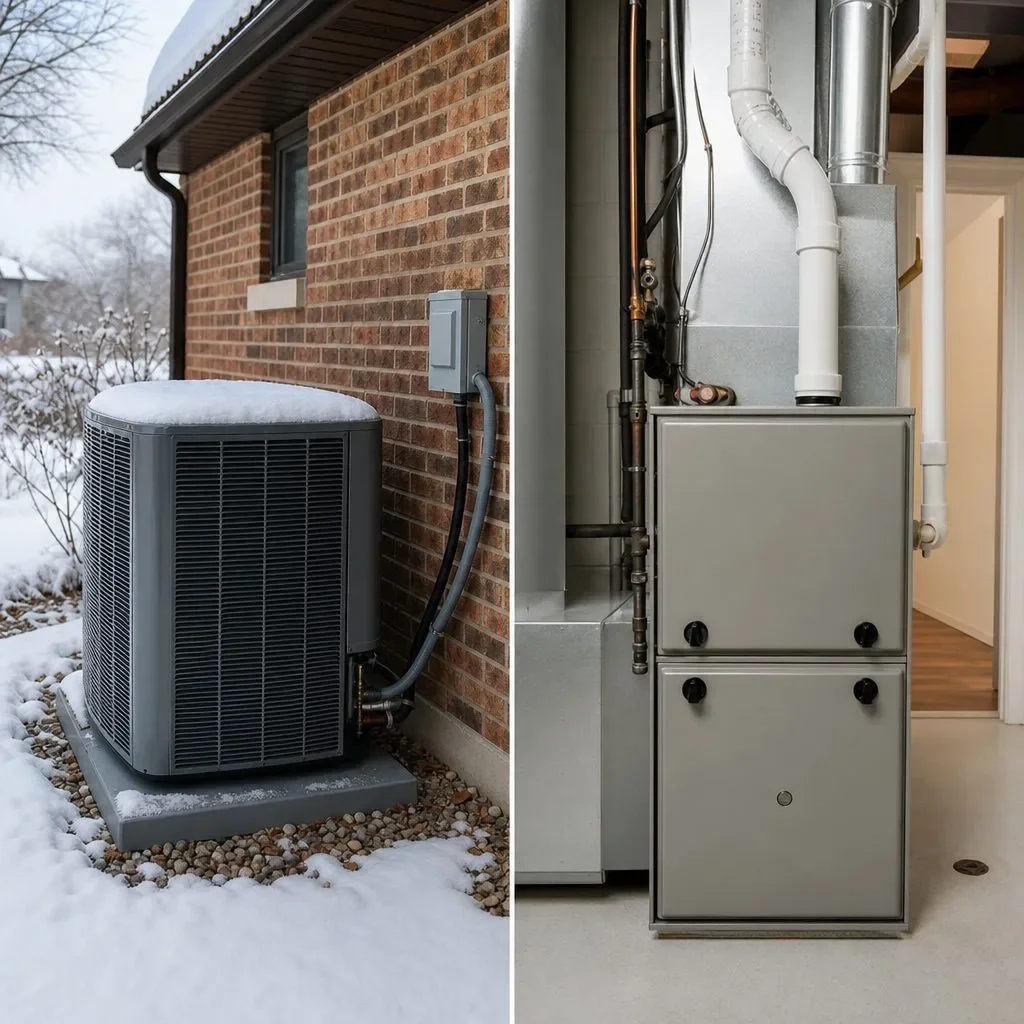
Heat Pump vs Furnace: The Short Answer
If you're replacing your heating system in Indiana, you've probably already run into this question. Both heat pumps and furnaces work — but they don't work the same way, and the right choice depends on your home, your utility costs, and how cold your winters actually get.
Here's a no-fluff breakdown so you can make a confident decision.
How Each System Works
Furnaces burn natural gas (or propane) to generate heat. That heat moves through your ductwork and warms your home directly. They're fast, powerful, and proven — most Indiana homes already have one.
Heat pumps don't generate heat. They move it. In winter, they pull heat from the outside air (yes, even cold air has heat energy) and transfer it inside. In summer, they reverse the process and act as an air conditioner.
One system. Year-round comfort.
Cost to Run: Heat Pump vs Furnace in Indiana
This is where Indiana's climate matters most.
Heat pumps run on electricity and are extremely efficient when temperatures stay above 30–35°F. At that range, a modern heat pump can deliver 2–3 units of heat for every 1 unit of electricity it uses. That's hard to beat.
But Indiana winters regularly dip below freezing — and when they do, heat pump efficiency drops. Older heat pumps struggle below 25°F. Newer cold-climate heat pumps handle temps down to -13°F, which changes the math significantly.
Gas furnaces shine in extreme cold. If you're already on natural gas and your winters are consistently brutal, a high-efficiency furnace (90%+ AFUE) is tough to beat on raw heating output.
Bottom line on cost:
- Mild-to-moderate winters → heat pump likely wins on operating cost
- Harsh Indiana winters with low gas rates → furnace may still be more cost-effective
- Dual-fuel systems (heat pump + gas backup) → best of both worlds for Indiana climates
Upfront Installation Cost
Furnaces are generally cheaper to install, especially if you're replacing an existing furnace and the ductwork is already in place. Expect $2,500–$5,500 installed for a mid-to-high efficiency gas furnace.
Heat pumps handle both heating and cooling, so you're replacing two systems at once. Installed costs typically run $4,000–$8,000+ depending on the unit and any ductwork changes. If you're also replacing an aging AC, that combined cost suddenly makes a heat pump a smart investment.
Which One Lasts Longer?
- Gas furnaces: 15–20 years average
- Heat pumps: 12–15 years average (they run year-round, so more wear)
Proper maintenance is the biggest factor either way.
Environmental Impact
If reducing your carbon footprint matters to you, heat pumps win — especially as Indiana's electric grid continues adding renewable sources. No combustion means no direct emissions in your home.
So Which Is Right for Your Home?
Here's a quick decision guide:
| Situation | Best Fit |
|---|---|
| Already on natural gas | Furnace or dual-fuel |
| No gas line, all-electric home | Heat pump |
| Replacing AC and furnace at once | Heat pump (strong value) |
| Extreme cold winters, tight budget | High-efficiency furnace |
| Want maximum efficiency + rebates | Cold-climate heat pump |
| Want both heating + cooling covered | Heat pump |
Indiana homeowners in moderate-climate zones (central and southern Indiana) tend to do well with heat pumps. Northern Indiana, with more extreme winters, often benefits from a dual-fuel setup or a top-tier cold-climate heat pump.
Ready to Stop Guessing?
The honest answer: the best system depends on your home's specific setup — ductwork, existing equipment, utility rates, and how you use your space.
Goff Heating & Plumbing installs and services both heat pumps and furnaces across the area. We'll walk you through the numbers, not just the sales pitch.
Call us or schedule online — we'll help you choose the system that actually makes sense for your home.